Too often we say that the cinema experience begins when the lights go down, when in reality it starts long before a ticket is scanned. When audiences enter the lobby, they encounter ‘the high-stakes decision zone’. Here they’re instructed where to look, what to buy, and how to feel; internally deciding whether the venue itself reflects the experience they paid for.
For exhibitors, this exclusive space, brimming in high-conversion opportunity, represents both the first impression and last opportunity to influence customer behaviour. Yet despite its significance, rarely does the first five minutes of the customer journey receive the same technological focus as the auditorium itself, where millions are spent on experiential upgrades like laser projection, immersive audio and premium seating.
Instead, many lobbies remain underinvested relative to their potential, with digital display systems often perceived as a cost to minimise instead of an asset to maximise. But like popcorn-ready patrons, things are looking up.
Recent industry events have underlined the importance of robust signage systems, evolving the narrative from cost-containment to value creation. One look at Germany’s elite will demonstrate how digital displays are becoming their hardest-working sales team.
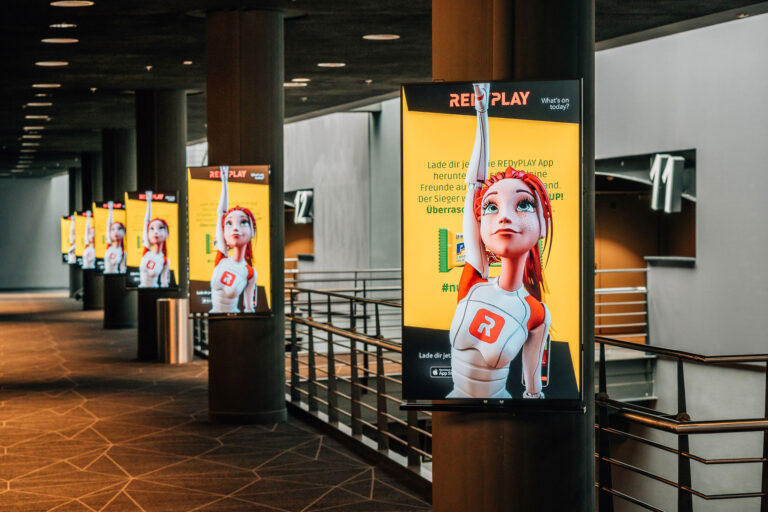
Visually synchronised omni-channel impact at Cinedom Cologne.
Automated, demographic-driven pricing and promotions
At Cineplex Münster, for example, dynamic menu boards tailor concession offerings throughout the day, seamlessly shifting from morning coffees to evening cocktails. The system also enables automated, demographic-driven pricing and promotions, like advertising a slushy campaign tied to a specific children’s release, without staff intervention.
We’ve also seen at Cinedom in Cologne how lobby and hallway displays can deliver visually synchronised advert creative, such as the promotion of the mobile gaming app REDyPLAY. Powered by Weischer Cinema, this strategy transforms passive viewers into active participants, encouraging audiences to compete for prizes and redeem vouchers.
Meanwhile, at Admiral Filmpalast, high-resolution LCD panels present their daily schedule complete with format and screening information. Designed to preserve the venue’s classic aesthetic, the signs maintain an analogue appearance while automatically syncing with the TMS and POS to ensure accurate, up-to-date listings.
These high-class, high-yield installs clearly define the difference between purpose-built solutions and falling into the consumer-grade trap.

Analogue in appearance but digital in function at Admiral Filmpalast.
In professional settings, digital signage must be reliable, dynamic, and adaptable
Off-the-shelf televisions, USB-driven content loops, and manually updated JPEGs may seem functional on the surface, but these systems are not built for the day-to-day rigour of cinema exhibition. They lack the visual control and durability that a professional aesthetic demands. More importantly, they limit agility, and if your signage isn’t dynamic it can prove a liability.
A failure to connect with the person standing in front of the screen is also a missed sales opportunity, especially if the Friday evening blockbuster crowd are met with children’s mid-afternoon sweet treat combos.
A robust signage solution is having the agility to pivot your proposition in real-time.
When dedicated commercial displays are paired with sophisticated content management software, exhibitors can adapt their messaging across every screen for every audience segment. As promotions become timely, the lobby becomes curated rather than incidental.

Andreas Stier,
Sales Director at OneCinema